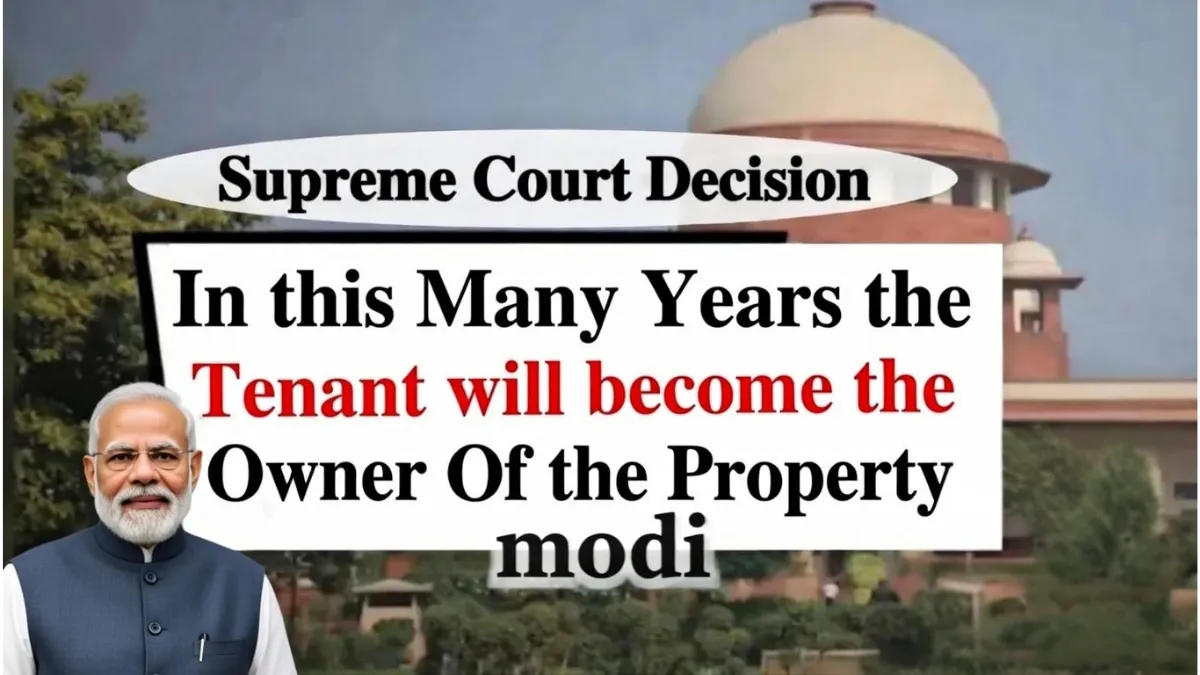
The Supreme Court has made an important clarification in property law by stating that possession of land carries decisive importance when determining ownership rights. This ruling has significant implications for property disputes across the country, especially in cases where documentation is unclear, disputed, or challenged after long periods of possession. The judgment reinforces the principle that lawful, continuous possession cannot be ignored while deciding ownership claims.
The clarification was issued by the Supreme Court of India, aiming to bring consistency and fairness to land and property-related cases.

What the Supreme Court Clarified
The court emphasized that possession is not a minor factor but a crucial element in deciding property ownership. When a person has been in continuous, peaceful, and lawful possession of land, such possession carries strong legal value. The ruling highlights that ownership cannot be decided solely on paperwork if possession clearly reflects control and use of the property over time.
Why Possession Matters in Property Law
In many disputes, land records may be outdated, incomplete, or contested. The Supreme Court acknowledged this reality and reinforced that possession reflects ground-level truth. A person occupying, maintaining, and using land openly for years establishes a strong claim that courts must seriously consider while adjudicating ownership disputes.

| Supreme Court Property Ruling Overview | Details |
|---|---|
| Core Principle | Possession plays a key role in ownership |
| Legal Context | Property and land dispute cases |
| Focus | Lawful and continuous possession |
| Impact Area | Civil property litigation |
| Beneficiaries | Long-term lawful occupants |
Impact on Ongoing and Future Disputes
This clarification is expected to influence thousands of pending property cases. Courts may now give greater importance to evidence of possession such as occupancy, usage, maintenance, and uninterrupted control. It also discourages false or delayed claims where individuals attempt to reclaim land long after losing possession.
What This Means for Property Holders
For people currently in possession of land or property, the ruling offers stronger legal confidence, provided the possession is lawful and not obtained through force or illegal means. It also underlines the importance of maintaining records, tax receipts, and proof of continuous use to support possession claims if disputes arise.

Legal Balance Between Documents and Possession
The Supreme Court did not dismiss the value of legal documents but clarified that documents must be evaluated alongside possession. Ownership decisions should reflect both legal title and actual control, ensuring justice is not defeated by technical gaps in paperwork alone.
Conclusion: The Supreme Court’s clarification strengthens the role of lawful possession in deciding property ownership, offering greater protection to genuine occupants and promoting fairness in land dispute resolution.

Disclaimer: This article is for general informational purposes only and is based on reported judicial observations. Legal outcomes depend on specific facts, evidence, and case circumstances. Readers should consult qualified legal professionals for advice related to individual property matters.