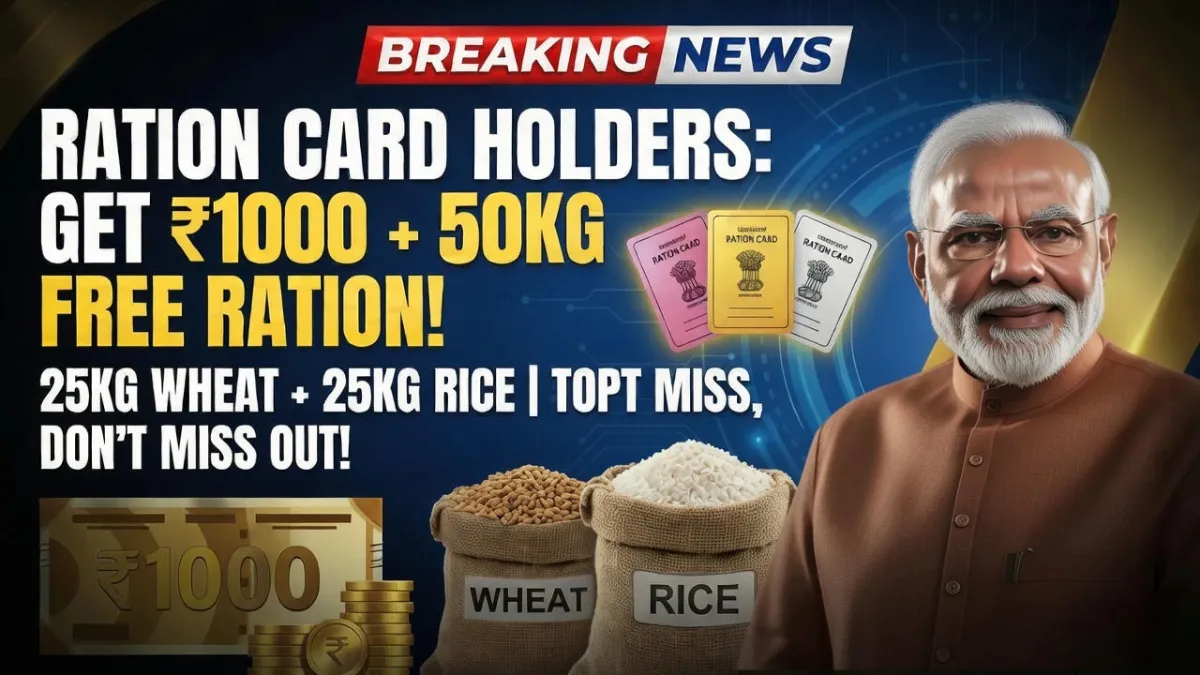
Across India, discussions around ration card benefits offering ₹1,000 cash assistance along with 25kg wheat, 25kg rice, and a salt packet have gained attention. These benefits are generally linked to state or central welfare schemes aimed at supporting low-income and vulnerable households amid rising living costs. While the exact benefits vary by state and scheme, ration cards continue to play a key role in accessing subsidized food grains and additional support.
What These Ration Card Benefits Mean
The combination of cash support and free or subsidized food grains is designed to reduce household expenses for essential needs. Food grains such as wheat and rice are distributed through Fair Price Shops under the Public Distribution System, while the cash amount is usually transferred directly to beneficiaries’ bank accounts through Direct Benefit Transfer when applicable.

Who Is Eligible to Receive Them
Eligibility depends on the type of ration card held and the specific scheme announced by the central or state government. Priority households, Antyodaya card holders, and other notified categories are commonly included. Income criteria, residency, and scheme-specific conditions determine whether a household qualifies for both food grains and cash assistance.
| Ration Card Benefit Overview | Details |
|---|---|
| Cash Assistance | Up to ₹1,000 under select schemes |
| Food Grains | 25kg wheat and 25kg rice |
| Additional Item | Salt packet in some states |
| Eligible Beneficiaries | Priority and eligible ration card holders |
| Distribution Mode | Fair Price Shops and DBT where applicable |
How Distribution Usually Works
Food grains are collected monthly or as announced from designated ration shops after biometric or card verification. Cash assistance, when included, is credited separately to linked bank accounts. The inclusion of items like a salt packet is typically a state-level initiative and may not be available everywhere.

Why Such Support Is Provided
These benefits aim to strengthen food security and provide temporary financial relief to families facing economic pressure. By combining essential groceries with limited cash support, governments try to ensure that basic nutrition and daily needs are met without disruption.
Conclusion: The ₹1,000 cash support along with wheat, rice, and other essentials highlights how ration card schemes continue to support millions of households. Understanding eligibility and local scheme details helps beneficiaries make full use of available assistance.

Disclaimer: This article is for general informational purposes only. Ration card benefits, quantities, and cash assistance vary by state and scheme and are subject to official notifications. Beneficiaries should confirm current entitlements through their local ration office or official government announcements for accurate and up-to-date information.